



Flexible Hose
Flexible Hose | Industrial Metallic, Shower, Gas and Ventilation Hose Lines
This industrial flexible hose range encompasses corrugated metal conduits, reinforced PVC and PU hoses, and braided plumbing assemblies built to transport liquids, gases, and air under varying pressure and thermal conditions. Manufactured from industrial-grade stainless steel, galvanized wire, and engineering polymers, these hoses provide reliable fluid and air routing for machinery, commercial plumbing, and ventilation networks while resisting kinking and mechanical wear.




Types and Product Models
Metallic Annular Corrugated Hose
Stainless steel 304 and 316 corrugated core wrapped with single or double stainless steel wire braid, engineered for high-temperature and high-pressure media transfer.
01
PVC Jacketed Flexible Metallic Hose
Galvanized or stainless steel core hose coated with an extruded PVC jacket, providing waterproof, oil-resistant, and corrosion-proof performance.
02
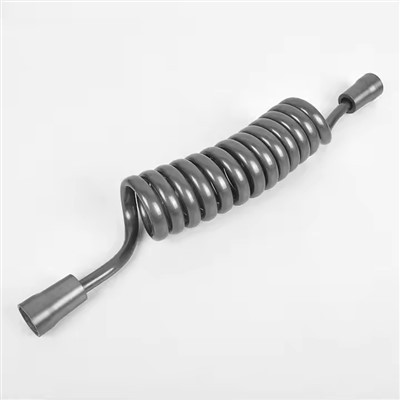
Shower and Sanitary Flexible Hose
Double-lock stainless steel or brass outer helix encasing an EPDM or PVC inner tube, certified for household and commercial plumbing fixtures.
03
Corrugated Gas Connector Hose
Annular or helical stainless steel tubing finished with safety yellow PVC coatings and precision brass end fittings for commercial and residential gas appliances.
04
PU and PVC Dust Extraction and Ventilation Ducting
Spring steel wire helix embedded in flexible polyurethane or polyvinyl chloride walls, offering high abrasion resistance and flexibility for sawdust, fume, and grain collection.
05

Inner Core and Tube: Extruded EPDM, PVC, or hydraulically formed thin-wall stainless steel tube serving as the primary fluid or gas containment barrier.
Reinforcement Layer: Multi-ply polyester yarn braiding, high-tensile stainless steel wire mesh, or embedded spring steel wire providing structural integrity against internal pressure and external crushing.
Outer Protective Cover: Extruded polymer jackets or metallic interlocking armor shielding internal layers from UV radiation, abrasion, and corrosive splashes.
End Fittings and Connectors: Carbon steel, brass, or stainless steel fittings including male or female threads, swivel nuts, and flanged ends permanently attached via hydraulic crimping collars.
Specifications
|
Technical Parameter |
Metallic Corrugated Hose |
PVC and PU Ventilation Duct |
Shower and Sanitary Hose |
Gas Connector Hose |
|
Size Range (ID) |
DN 6 mm to DN 300 mm |
25 mm to 500 mm |
1/2 inch to 3/4 inch |
DN 8 mm to DN 25 mm |
|
Body Material |
Stainless Steel 304 and 316 |
PU and PVC with Steel Wire |
Stainless Steel and Brass |
Stainless Steel 304 |
|
Working Temperature |
-200 degrees C to +600 degrees C |
-40 degrees C to +90 degrees C |
-10 degrees C to +90 degrees C |
-20 degrees C to +105 degrees C |
|
Max Working Pressure |
Up to 15.0 MPa (Size dependent) |
Vacuum and Low Pressure |
Up to 1.0 MPa |
Up to 0.05 MPa |
|
End Connection Types |
BSP, NPT, Flange, Weld-end |
Open Hose and Clamp Fit |
F1/2 x F1/2, Conical Nut |
Male and Female, Quick Connect |
Application
These flexible hose systems serve diverse industrial, commercial, and utility sectors requiring reliable media conveyance:
Industrial Machinery and Hydraulics
Transferring cooling water, cutting fluids, and hydraulic oils within tight machine tool spaces subject to continuous movement.
Plumbing and Sanitary Installations
Supplying water to faucets, water heaters, and flush systems under standard residential and commercial plumbing pressures.
Gas Distribution Networks
Connecting commercial kitchen equipment, boilers, and heating appliances to gas supply piping.
HVAC and Dust Collection Systems
Exhausting fumes, wood chips, and warm air through ventilation ducts in factories, workshops, and commercial buildings.
Manufacturing Capability
Automated Tube Forming and Welding
Stainless steel strip edges are precision-formed and TIG or laser welded in a protective argon atmosphere, achieving seam integrity tested for zero gas leakage.
High-Speed Wire Braiding
Multi-carrier braiding machines apply uniform stainless steel wire mesh over the corrugated core at controlled tension angles to maximize burst pressure resistance.
Hydraulic Crimping and Swaging
End fittings are attached using calibrated multi-jaw hydraulic crimping presses that exert even radial force, preventing fitting blow-off under maximum operating loads.
Quality Control
Pressure and Burst Testing
Production batches undergo hydrostatic pressure testing at 1.5 times the maximum working rating, alongside destructive burst tests to verify structural safety margins.
Leak Detection
Metallic corrugated and gas hoses undergo pneumatic underwater bubble tests or helium mass spectrometer leak detection to identify microscopic pinholes.
Dimensional and Thread Gauging
End connection threads are inspected using calibrated plug and ring gauges to guarantee thread depth and pitch accuracy.
Tensile Pull Verification
Crimped fitting assemblies are sampled on tensile test benches to verify that fitting retention forces exceed international pull-off standards.
Our Certificates


Customization
Custom Lengths and Diameters
Production runs tailored to exact metric or imperial lengths, from short connector hoses to 50-meter bulk rolls.
Special Alloy Selection
Custom manufacturing using corrosion-resistant alloys such as Inconel, Monel, or specialized stainless steel grades for extreme chemical environments.
Custom End Fittings
Tailored machining of end fittings, including non-standard thread pitches, quick-disconnect couplings, or specialized flange drillings.
Packaging and Delivery
Coiled and Bounded Bundles
Smaller diameter hoses are tightly coiled, secured with strapping bands, and wrapped in protective woven polyethylene film.
Straight-Length Crating
Rigid metallic hoses and large-diameter assemblies are packed in reinforced wooden crates with internal bracing to prevent bending deformation during transit.
Clear Component Labeling
Shipping cartons and hose assemblies carry durable waterproof labels detailing part numbers, batch numbers, length, and pressure ratings.


FAQ